
Using Children’s Home Language in the Classroom – A Teacher’s Powerful Experience
239
Views
26
Likes
Shares
15
Downloads
About This Resource
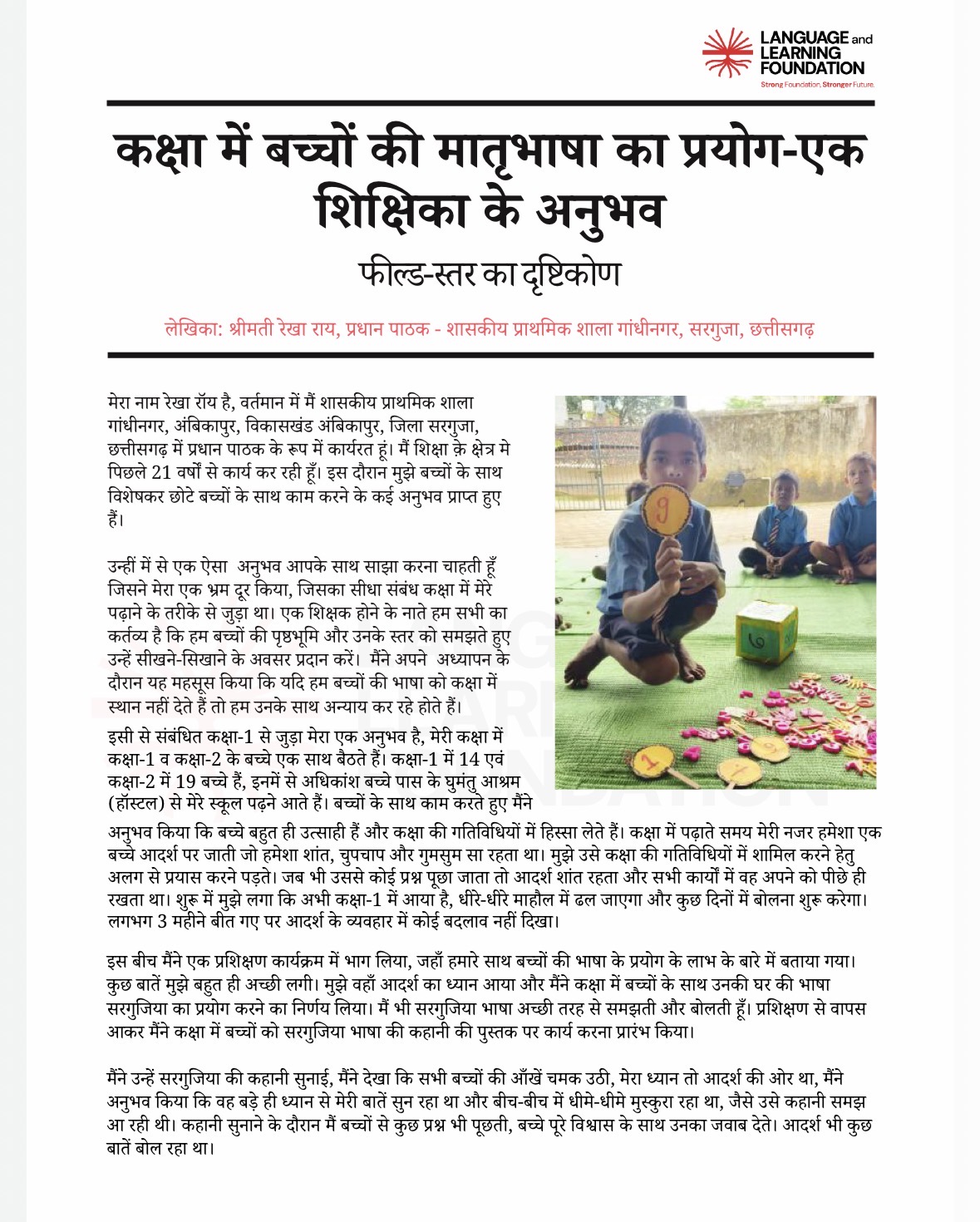
This case study highlights how Head Teacher Rekha Roy transformed her classroom simply by recognising the power of children’s home language. While teaching Grades 1 and 2 together, she noticed that a child named Adarsh remained silent, withdrawn, and hesitant to participate.
A training programme on multilingual classrooms helped her realise that children learn best when their own language finds space in their learning environment. She began using Sargujia, the home language of most children in her class, while telling stories, asking questions, and facilitating discussions.
The impact was immediate—Adarsh, who had been quiet for three months, suddenly began listening attentively, smiling, and confidently responding in his language. Rekha Madam realised that the problem was not the child’s ability, but the mismatch between classroom language and the language children understood.
This experience changed her teaching approach:
Children’s home languages became a bridge to help them understand school concepts.
Classroom participation increased, especially for shy learners.
Learning became joyful, meaningful, and culturally rooted.
Through her story, she urges all teachers to honour learners’ language, culture, and environment. When children’s language gets respect in the classroom, their voice, confidence, and learning flourish.
Writer: Rekha Roy, Head Teacher, Government Primary School Gandhinagar, Ambikapur, Chhattisgarh